
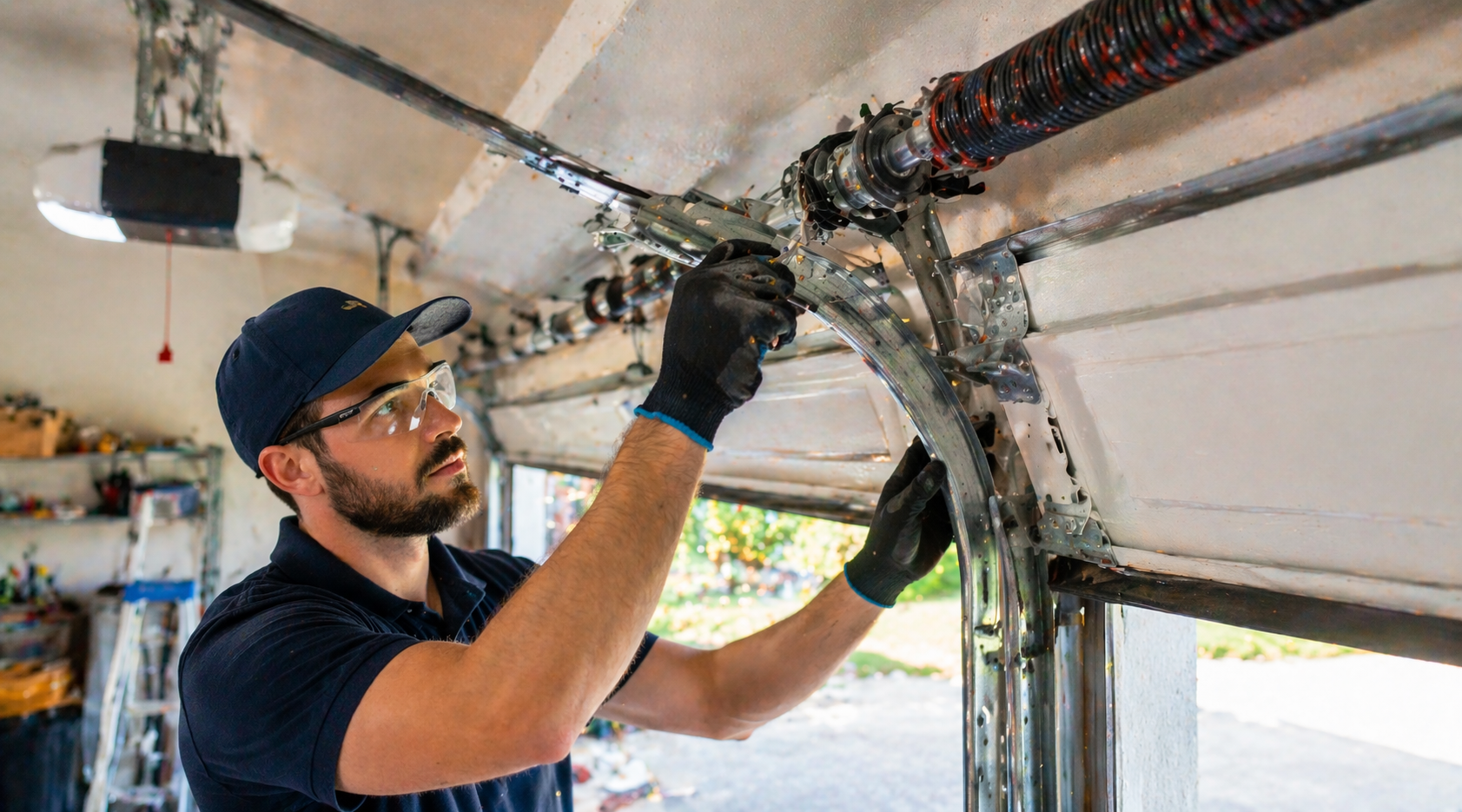
 Garage doors almost never make noise for no reason. Most of the time, the sound is the first sign that something inside the system is wearing out or getting out of alignment.
If you catch it early, the fix is usually quick and cheap. If you don’t do anything about it, the problem will get worse until a spring breaks, a motor stops working, or the door won’t open on the coldest morning of the year.
In this guide, our team of garage door experts will explain why your garage door is so loud and offer easy fixes that work.
6 Things That Make Garage Doors Noisy and How to Fix Them
Squeaking or screeching
When joints are dry, they often make high-pitched squeaks or screeches. When hinges, rollers, and brackets aren’t properly lubricated, metal-on-metal friction happens while the machine is running, making loud noises.
Solution
Put garage door lubricant on the roller shafts, bearings, and hinges. To spread the lubricant around, open and close the door a few times. The sound goes away right away most of the time. If it comes back within days, the rollers themselves are most likely worn out and might need replacement.
Noise from grinding
When parts are grinding, it usually means they are dragging instead of rolling. A lot of the time, this happens because debris builds up in the tracks. Sometimes the opener motor makes the noise instead. As the door slowly rises, you might hear a low growl. That often means that the internal gears are worn out.
Shaking or rattling
A garage door that rattles or shakes most of the time is due to loose hardware. After months of moving, the nuts and bolts are a little loose. The door still works, but the structure shakes as it opens and closes.
Banging or Popping
When the springs lose their proper tension, they usually make a loud pop. The springs hold up the entire door, and as they weaken, the balance shifts quickly.
Noise from scraping
A scraping noise usually means that the garage door has moved a little bit in its tracks. The rollers don’t move smoothly anymore; instead, they start to rub against the edges of the metal track.
Look closely at the vertical tracks. There should be the same amount of space on both sides of the rollers. If one side looks tighter than the other, the tracks might not be lined up right.
Loud at the beginning, quiet at the end
If your garage door sounds strained or unusually loud when it opens but works fine when it closes, the opener might be trying to make up for too much weight.
The motor has to work harder to lift the door when it opens without the proper spring support, which makes it louder and strains it more. When the door closes, gravity helps it move, so it sounds normal.
When the noise tells you to stop using the door
- The door doesn’t lift evenly.
- The door closes with a bang.
- A cable is either loose or hanging.